

JubAp.eu · Premium Institutional Study
Strategic Reframing
The measurable change in value and risk produced when an organization moves from one strategic frame to another.

Not “a new perspective” in a vague way
Reframing is not insight. It is the difference in value and risk between the frame you have and a better one.
Most organizations do not fail transformation because they lack solutions. They fail because the real problem stays mis-framed — and the best options remain invisible before the discussion even begins. Reframing makes that gap explicit, comparable, and measurable.
The premise
Strategic options live inside frames
A frame does not only describe the problem. It silently decides which options are visible, which are considered legitimate, which are excluded without discussion, which assumptions are treated as facts, and which risks are never seen. A poor frame can make the best option unavailable before anyone evaluates it.
It sets the option space
The frame defines the full set of strategic options the organization is even able to see, compare and fund.
It hides the alternatives
Options outside the frame are excluded without being debated — they never reach the table as candidates.
It fixes the assumptions
Constraints get accepted as permanent and assumptions as facts, so investment looks rational inside a flawed picture.
It produces drift
The team believes it is executing option A while the frame quietly pulls execution toward a weaker outcome.
The model · how reframing becomes measurable
Frame Value, Frame Risk, Frame Uncertainty
Executives decide in two coordinates: value and risk. Reframing is expressed in exactly those coordinates, plus the confidence around them — so a frame can be compared against another frame rather than admired in the abstract.
Frame Value
The expected value of the strategic option space a frame makes available — the weighted value of the options it lets you see, legitimize and execute.
Frame Risk
The probability and impact of strategic drift: how likely a frame is to pull execution away from a high-value option toward a weaker or value-destroying one.
Frame Uncertainty
The confidence range around the expected value and risk. A high-upside option inside a fragile frame can be worth less than a moderate one inside a stable, executable frame.
Reframing Value Creation
The improvement in expected value, the reduction in drift risk, and the reduction in uncertainty achieved by moving from the current frame to a better one.
“We need to reduce application costs.”
“We need to reduce complexity while preserving differentiated capability.”
Worked example. A frame that gives a 60% chance of a +€10M option and a 40% chance of drifting to a −€2M path is not “worth €10M.” Its expected value is 0.60 × 10 + 0.40 × (−2) = €5.2M — before adjusting for uncertainty. Reframing earns its fee by improving that number, not by promising the best case.
| Frame | Expected value | Frame risk | Uncertainty | Interpretation |
|---|---|---|---|---|
| Current frame | €2M | High | High | Limited value, high risk of drift |
| Reframed option A | €6M | Medium | Medium | Better value, manageable risk |
| Reframed option B | €10M | High | Very high | Attractive but unstable |
| Reframed option C | €5M | Low | Low | Lower upside, stronger reliability |
The best frame is not the one with the most spectacular upside. It is the one with the best balance of expected value, drift risk and uncertainty — which is exactly how executives already think, and exactly what the study makes explicit.
What a reframe looks like
The same reality, a larger option space
A better frame does not invent options out of nothing. It changes which options become visible, legitimate and executable — and removes the ones that quietly destroy value.
“We need to reduce application costs.”
- Eliminate licenses
- Consolidate tools
- Force standardization
- Cut vendors
RISK ↓ destroys business capability while cutting cost
“Reduce complexity while preserving differentiated capability.”
- Separate duplication from adaptation
- Mutualize commodity services
- Preserve strategic local capability
- Redirect spend toward AI readiness
VALUE ↑ · RISK ↓
“We need AI.”
- Buy AI tools
- Launch pilots
- Hire data scientists
- Write an AI roadmap
RISK ↓ scattered activity with no operational value
“We need intelligence-ready operations.”
- Clarify process ownership
- Improve data quality
- Integrate operational signals
- Tie use cases to measurable value
VALUE ↑ · RISK ↓
The study · modular by design
Four steps, clear exits after each
The work is structured so the organization’s time, data and internal trust are treated as more valuable than the fee. You can stop after any phase. Each is contracted separately.
Qualification
A 1–2 page executive brief using only publicly available information: how the organization currently frames the problem, and which alternative framings could be explored — at high level, without detail. Its purpose is to confirm a reframing study would be useful, not to diagnose.
EXIT → stop here at no costReframing Study — Frame & Alternatives
A short document (typically 4–8 pages): the current frame with its explicit and implicit assumptions, option space and drift risks; then 1–3 alternative frames, each with structuring assumptions and a qualitative value / risk / uncertainty profile compared to the current one. Built on reasonable, market-standard assumptions.
EXIT → use the new frame with your own meansAssumption Validation
We isolate the critical assumptions the preferred frame depends on, then test them through a focused protocol — targeted interviews, review of past decisions, a small workshop. Reasonable assurance on what must be true, not a full audit. Can be IMSV-led, client-led with a validation guide, or mixed.
EXIT → decide with validated confidenceDe-risking — Reframing Assurance Module
Using the JUBAP framework, we identify the minimum set of leverage points and KPIs that make the new frame self-sustaining — reducing the real probability of drifting back to weaker options. Not a full transformation; a minimal design of leverage that protects the value the reframe revealed.
EXIT → or continue into transformation servicesWhen it earns its place
Before, during, and at pivot moments
Reframing is useful before transformation, to avoid solving the wrong problem; during transformation, to unblock resistance and recover agility; and at pivots, to change direction without losing legitimacy, budget or momentum.
“Are we solving the right problem?”
Before transformation
The organization is about to commit budget, vendors, technology or political energy and needs to test whether the current problem definition is still valid.
“Why is this not moving?”
During transformation
The programme is already running but resistance, ambiguity, delays or contradictions reveal that the original frame may no longer be sufficient.
“What must change in the frame?”
At pivot moments
Direction needs to adjust without losing legitimacy or execution momentum. In complex transformation, a pivot is not failure — it is the condition for strategic agility.
Measuring impact · the part most studies skip
The value is calibrated, then surveyed
Two to six months after the engagement, a short anonymous survey of 10–20 selected participants assesses observed and perceived impact across five areas — and records the level of access actually provided, so results are interpreted fairly. The only principle is transparency: outcomes are calibrated against the resources committed.
Cost avoided / value leakage
Unnecessary spend, duplicated work, wrong initiatives, avoidable complexity surfaced.
Decision clarity
Clearer view of the real problem, the options and the priorities.
Execution feasibility
A more realistic, sequenced, actionable path with clear ownership.
Resistance unlocked
Hidden blockers, incentives, fears, contradictions and field constraints made visible.
Perspective shifted
A changed understanding of the challenge, opportunity or transformation path.
Frame Value questions
- Did the reframing reveal strategic options not previously considered?
- Did it improve the perceived value of the available options?
- Did it help identify a better option than the one initially assumed?
- Did it help stop, reduce or redirect a lower-value initiative?
- Did it make a higher-value path more legitimate or executable?
Frame Risk questions
- Did the reframing reveal risks hidden in the original frame?
- Did it reduce the risk of executing the wrong solution?
- Did it expose assumptions that could have led to poor execution?
- Did it reduce the probability of transformation drift?
- Did it improve the organization’s ability to pivot coherently?
Time invested, number of participants, access to field reality, data provided, organizational scope.
A post / multi-stakeholder approach in the family of organizational quasi-experiments — honest about what it is, and what it is not.
A short engagement may create clarity; a deeper one can quantify cost avoidance, resistance patterns and strategic shifts. The bar moves with the access given.

Why we can reframe
Our authority to reframe comes from repeatedly working where the existing frames were no longer enough.Not a generic consultancy applying a standard framework — a frontier institution whose practice begins where disciplines, geographies and operating models stop being sufficient.
Field evidence · the reframe behind the result
The visible wins were reframes first
Each of these signature cases is documented in the JubAp.eu field notes. In every one, the breakthrough was not more effort inside the old frame — it was a move to a frame in which the better option became obvious.

The workforce that became the alternative
1,200 workers facing extinction, a changing political regime, 271 micro-projects — and recognition as one of the most punctual airports in the world.

The packaging machine nobody could see
Compliance, production, quality and leadership all orbited one technical fault — and each function could only see it from its own trench. Where JUBAP was first named.
Rationalization as value discovery
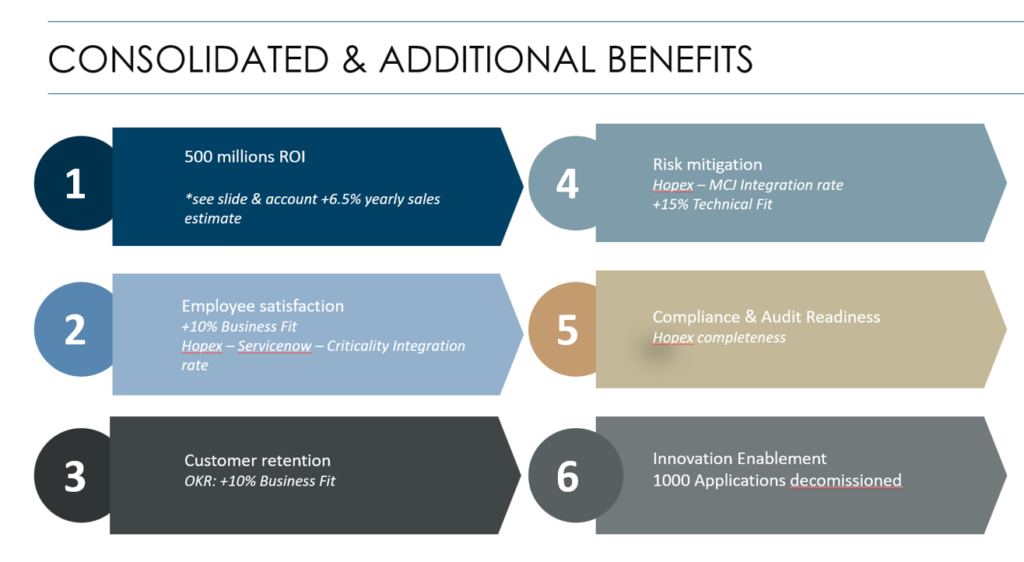
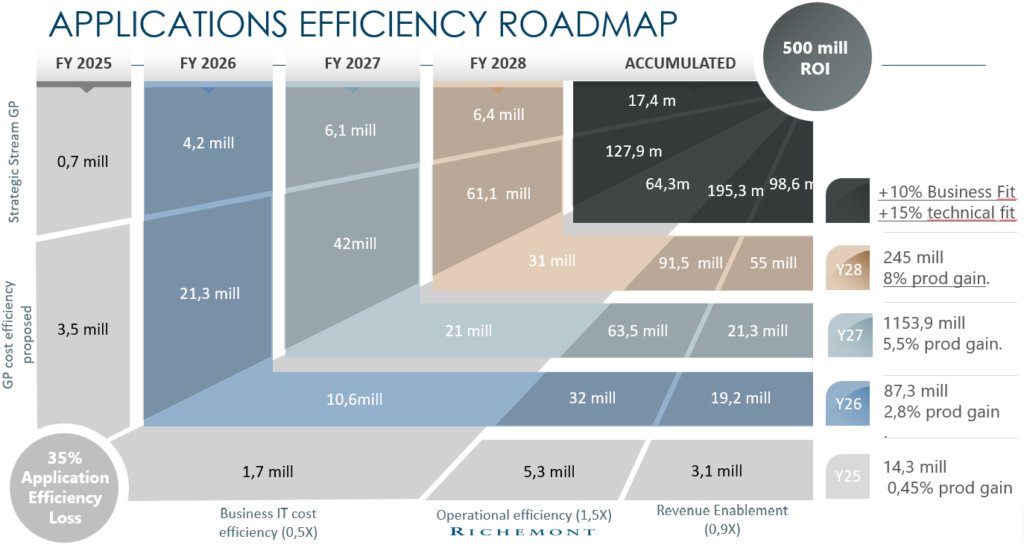
Reframing “what can we remove?” into “what value is already inside the group that we cannot yet see?” — field-proven across a 50+ Maison programme.
ADO, PEMEX, luxury operations & more
The pink-bracelet safety reframe at ADO, the −42.2% accident study at PEMEX, luxury operations and supply-chain rationalization — the full body of field notes.
How we work · method principles
Rigorous, discreet, stand-alone
Public data first
By default the work uses publicly available information — what could be found by other means. The service does not depend on internal secrets to function.
Confidential when needed
Where non-public data is required, an NDA is signed and a higher level of diligence applies. A frame can even be tested against a standard market peer, not your specific firm.
A complete service in itself
Reframing is fully stand-alone. If you wish, it can later trigger transformation, engineering or integration work across the ecosystem — but it never has to.
Engagement model
Three ways to engage
Contracted as an Institutional Study Agreement or a short Engagement Letter — light, specific, and processed through innovation or research budgets rather than slow vendor-onboarding funnels.
Reframing
Phase 1
- Current frame documented
- 1–3 alternative frames
- Value / risk / uncertainty profile
- Assumption validation
- De-risking module
Reframing + Validation
Phase 1 + 2
- Current frame documented
- 1–3 alternative frames
- Value / risk / uncertainty profile
- Critical assumptions tested
- De-risking module
Reframing + Validation + Assurance
Phase 1 + 2 + 3
- Current frame documented
- 1–3 alternative frames
- Value / risk / uncertainty profile
- Critical assumptions tested
- JUBAP leverage points & KPIs
Each phase is contracted separately. If the study indicates the transformation should be adjusted, redirected or reframed further, follow-up can be activated through a short addendum to the base agreement — without a new institutional onboarding process.
The first conversation has no cost
Bring the frame. We’ll read it.
The qualification brief tells you, in 1–2 pages and from public information alone, whether your problem is mis-framed — and what a better frame could be worth. No diagnosis, no obligation.

Strategic Reframing is a proprietary institutional study held within the JubAp ecosystem and stewarded by The Integral Management Society / IMSV.org, a Swiss frontier institution based in Geneva. It sits inside the wider JUBAP framework and the Human Intelligence Gap research line. The capability has been documented and traceable in the field since 2013.