
In a decentralized group, duplication is not always inefficiency. It is often the record of how each part adapted to a real difference.
Rationalization series · Stewarded by The Integral Management Society / IMSV.org
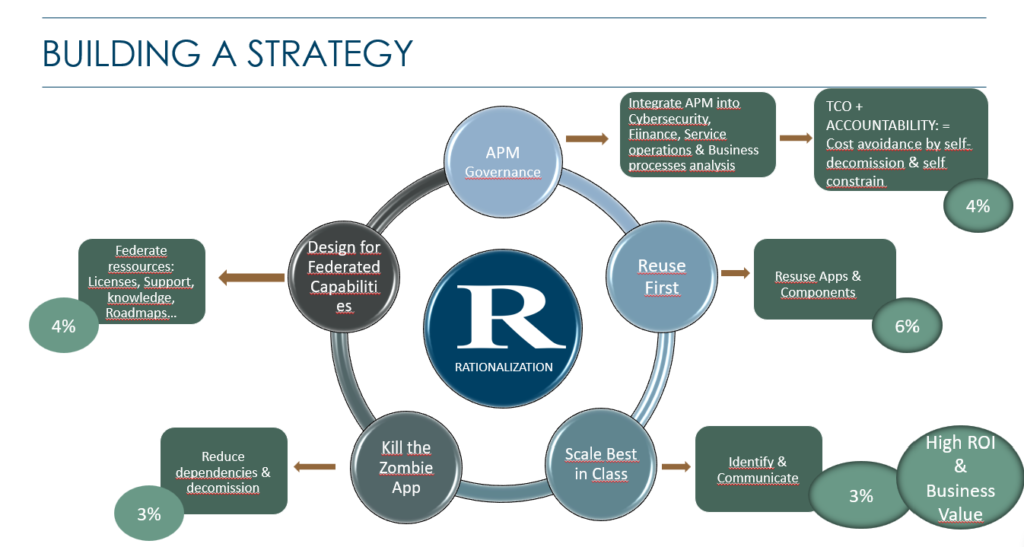
The instinct to equate duplication with waste
Most rationalization begins the same way: count the number of applications serving a single capability, identify the surplus, and mark it for removal. In a uniform organization that instinct is often sound. In a decentralized, heritage-rich group it is frequently mistaken — and the mistake is invisible at the moment it is made, because a list cannot show the difference between a costly redundancy and a deliberate adaptation.
The number of solutions per capability is not, by itself, evidence of inefficiency. It is evidence that the same need was met more than once. Whether that is waste depends entirely on why.
What multiplicity often records
Before treating duplication as redundancy, it is worth asking what produced it. In a group of many houses, the same capability appears in several forms for reasons that are not waste.
Local adaptation. Regulation, market structure, language and operating model differ by country. A “duplicate” is often a legitimate local fit, not a careless copy.
Customer expectation. Clienteling and demand patterns in Japan, Europe, the United States and China can differ markedly, sometimes in opposite directions. One model rarely serves all.
Experimentation. Several attempts at one problem hold lessons — including the unsuccessful ones — that were never surfaced at group level.
Heritage and identity. Capabilities built within a house over decades express what makes it distinctive, and cannot simply be substituted.
Telling waste from variety
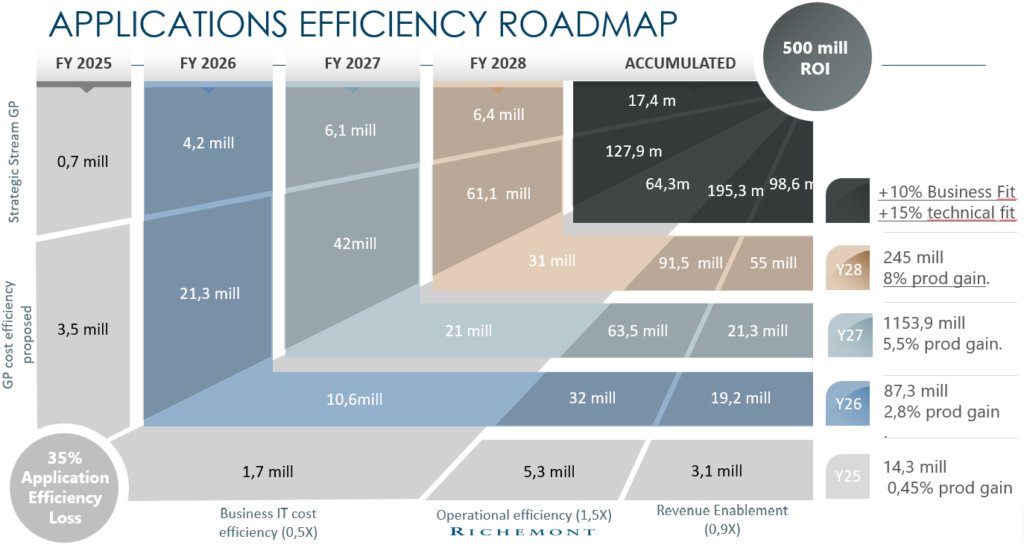
Duplication can hide waste, or it can hide variety, experimentation and innovation. The two look identical on a portfolio list and diverge only in context. To distinguish them, each instance has to be read for why it was created, for which problem, under which culture and constraints, against what metrics, and with what outcome. Counting cannot do this. Understanding can.
On a list, a costly redundancy and a hard-won adaptation are the same line item. The difference is only visible in context.
Eliminating variety is invisible now and expensive later
The danger of treating all duplication as waste is asymmetric, and that asymmetry is the heart of the matter.
A genuine redundancy left in place costs a known, recurring amount that is easy to see and easy to justify removing. A value-bearing adaptation removed by mistake costs something that appears on no budget line: a capability the organization quietly loses the ability to perform, often noticed only when it is next needed and found to be gone. This is the capability loss the Attribution Gap describes — value destroyed without anyone being able to trace the loss back to the decision that caused it.
An overlooked redundancy is a visible, recoverable cost. A deleted adaptation is an invisible, often irreversible one.
Treat the portfolio as optionality
The disciplined response is neither to defend all duplication nor to eliminate it on sight, but to read it. Preserve what expresses identity; scale what is reusable beyond its origin; consolidate what is genuinely redundant; and retire what no longer creates value. Variety becomes optionality rather than error — a source of advantage to be curated, not a defect to be removed.

That selective judgement is the substance of the Diamond Inside methodology and the five decisions it resolves into — keep local, consolidate, scale, transform or retire. The discipline begins with refusing the false choice between standardizing everything and leaving everything alone.
In one line
Duplication is a question, not a verdict. The work is to answer it before acting.

Part of the Rationalization series, stewarded by The Integral Management Society / IMSV.org, written as a companion to the Human Intelligence Gap research line.
The Diamond Inside method Series 01 — From useful to indispensablePhotographs are from the firm’s field work during a decentralized multi-Maison programme and are illustrative of the operating environment described.