
Architectural Translation for International Deployment
Architectural Translation for International Deployment
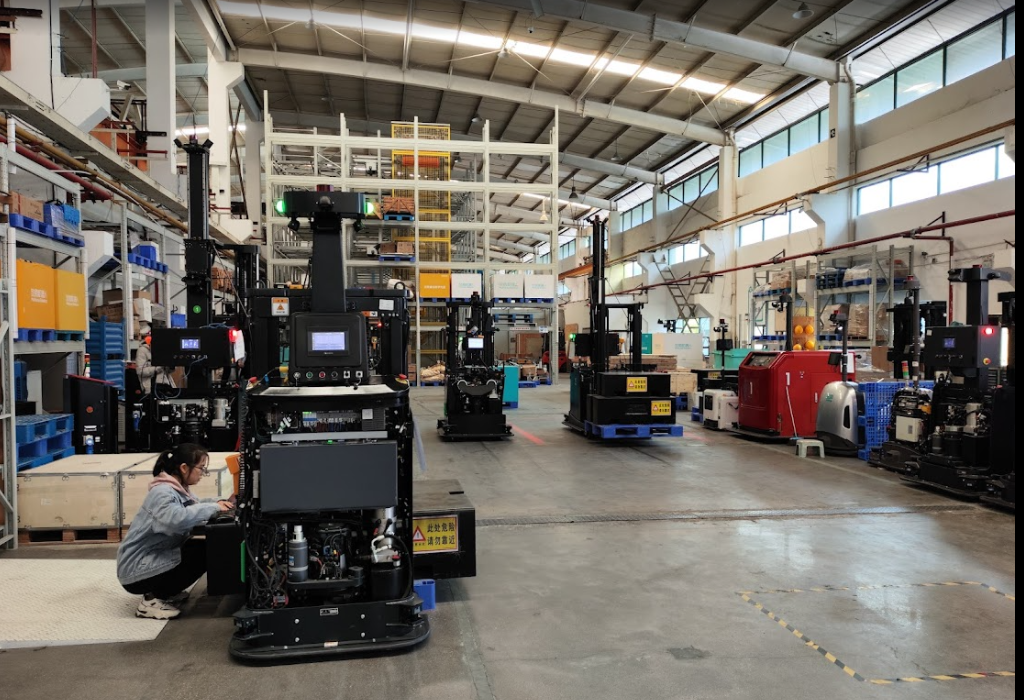

The engagement that began in Shenzhen with Multiway Robotics is best understood as part of a broader Greater China industrial innovation corridor, spanning Shenzhen, Hong Kong, Shanghai, Beijing and Taiwan-linked manufacturing chains. It was not a single “project” but a series of concrete, sponsor-funded assignments and visits that collectively demonstrated one specific, high‑value capability of JUBAP.eu: architectural translation between fast‑moving Chinese engineering ecosystems and the deployment realities of international clients.
This capability is not theoretical. It was exercised under real commercial conditions, with deliverables, technical decisions, and travel funded by sponsors across Mexico, Japan, China and Taiwan, in sectors ranging from robotics and logistics to oil and gas and industrial safety equipment.
Extended Chinese Innovation Ecosystem
The GBA corridor and Shenzhen
The work anchored itself in the China Greater Bay Area (GBA), one of the most powerful innovation hubs in the world, where Shenzhen and Hong Kong form a continuous corridor for smart manufacturing, robotics, AI and Industry 4.0. Shenzhen is widely described as the “Silicon Valley of hardware”, with a dense maker culture, advanced manufacturing capacity and a supply base where almost any electronic component or hardware element can be sourced and prototyped at speed.
Within this ecosystem, Multiway Robotics stands out as a Shenzhen‑based provider of AGV/AMR intralogistics solutions, combining automated forklifts, AMRs and its own WMS/WCS stack for warehouse operations and extended warehouse management scenarios. It operates inside a logistics‑robotics market expected to grow from around USD 13 billion in 2025 to roughly USD 65 billion by 2034, implying near‑20% compound annual growth — a rate that challenges the ability of many international buyers to integrate what the ecosystem produces.
Hong Kong as bridge and amplifier
Hong Kong plays a complementary role as financial gateway, regulatory interface and secondary logistics/innovation node for the region. Companies like Hai Robotics — also founded in Shenzhen and focused on warehouse automation — have chosen Hong Kong as a base for international expansion into Southeast Asia, underlining how GBA robotics firms increasingly use Hong Kong to project their solutions globally. This pattern mirrors the broader structure of the engagement: technical depth in Shenzhen, with extended relationships, financing and deployment paths crossing through Hong Kong and beyond.
Shanghai, Beijing and national‑level R&D
Shanghai and Beijing bring a different layer: national‑level R&D, e‑commerce logistics scale and university–industry collaboration. JD.com and other logistics players are partnering with Chinese universities such as HKUST to build joint laboratories in robotics, smart logistics, embodied intelligence and autonomous navigation, explicitly targeting autonomous robots, drones, 3D vision and indoor positioning for smart supply chains. This R&D layer informs the industrial solutions that later appear in Shenzhen‑based hardware ecosystems, including AMR and warehouse robotics products destined for export.
Taiwan‑linked manufacturing and safety equipment
On the manufacturing side, Taiwanese factories remain deeply integrated into global electronics and industrial equipment supply chains, including safety equipment and components used by Mexican industrial distributors and brands. In the engagement, this was reflected through sponsors such as CIPSA / SIVASA — Mexican companies with production in Taiwan — which required not only cost‑effective manufacturing but also architectural coherence between Chinese/Taiwanese production capabilities and Latin‑American deployment conditions in industrial safety and equipment.
The result is an extended ecosystem: Shenzhen and Hong Kong as robotics and hardware innovation hubs, Shanghai and Beijing as R&D and logistics intelligence anchors, and Taiwan as a manufacturing partner — all of which must be architecturally aligned with international client environments that often operate under very different systems, norms and constraints.
Is the Architectural Translation Problem Real?
You described a recurring risk: Chinese engineering teams can build powerful robotics and industrial solutions quickly, but there is a structural gap between what they design for their local ecosystem and what international clients can actually deploy safely and reliably. Research and industry evidence show this is not just an impression.
Evidence from Chinese manufacturing and export
- Legal and commercial practitioners working with foreign buyers in China report that the risk landscape has shifted from simple quality‑control issues to complex, structural risks involving factory insolvency, advance‑payment fraud, design/quality downgrades and the “weaponization” of IP by manufacturers.
- These reports document cases where suppliers alter materials or specifications without clear communication, leading to products that technically “match” a contract but fail in real‑world deployment because key architectural or quality assumptions were silently changed.
- Analyses of “design utilization” in Chinese firms show that while Chinese companies are highly competitive on product aesthetics and usability, aligning design decisions with long‑term international deployment and brand requirements remains uneven; design is often applied for rapid competitiveness rather than fully integrated lifecycle thinking.
Taken together, these findings support your intuition: foreign clients face non‑trivial risks of design and architecture mismatch when they rely on Chinese manufacturing without strong technical and contractual translation layers.
Evidence from robotics and SAP EWM integration
On the robotics side, the complexity of integrating warehouse robots with enterprise warehouse systems like SAP Extended Warehouse Management (EWM) is well documented:
- SAP Warehouse Robotics and related documentation highlight that integrating robots into SAP EWM requires specific architectural conditions: 1‑to‑1 mapping between robots and resources, dedicated queues for robotic orders, strict constraints on warehouse order structure (for example, one handling unit task per order), and careful configuration of cloud connectors, destinations and robot workplaces.
- SAP EWM integration guidance stresses that design choices about storage types, sections, queues and exception handling must be aligned between the robot fleet management system and EWM, otherwise automated tasks will fail or require manual recovery, undermining the whole automation promise.
- Industry case studies show that robotics and AI in SAP EWM are used to solve organizational challenges such as labor shortages, error rates and responsiveness, but only when data models, process design and robotic capabilities are carefully synchronized with the warehouse’s system of record.
None of this is “plug and play”. To work, robotics integration must be architected end‑to‑end between the robot vendor’s assumptions and the client’s enterprise stack.
When you combine these two layers — systemic risks in Chinese manufacturing/export and high integration complexity in warehouse robotics — the structural nature of the architectural translation problem becomes clear: international clients can easily buy technologically impressive solutions that are mis‑aligned with their real operating, legal and systems environments.
Business Challenge in This Engagement
Against this backdrop, the core challenge in the extended China engagement was:
How to ensure that advanced Chinese robotics and industrial capabilities could be architected, adapted and delivered in a way that truly matched the requirements of international clients — technically, operationally and organizationally.
This challenge had several specific dimensions:
- Aligning AMR/AGV fleet architectures with enterprise warehouse systems (SAP EWM or equivalents), not only at the interface level but at the level of queues, order structures, exception handling and long‑term maintainability.sap+1
- Ensuring that production designs in Shenzhen or Taiwan did not embed assumptions that would break under Latin‑American, European or Japanese deployment conditions (different safety regimes, different norms, different process patterns).
- Preventing architectural mismatches where solutions that function well in Chinese pilot environments fail in client warehouses due to layout, process or IT differences.
This is exactly the space where many cross‑border engagements fail: they assume that “works here” will translate into “works there” without a dedicated architectural mediation layer.
Engagement Structure and Sponsors
Within this extended ecosystem, the engagement unfolded across multiple sponsors and geographies:
- Multiway Robotics (Shenzhen) — core robotics and warehouse automation partner, providing AGV/AMR and intralogistics solutions for extended warehouse management scenarios.agvnetwork+2
- CIPSA / SIVASA (Mexico–Taiwan) — Mexican industrial safety equipment and franchising companies with manufacturing in Taiwan, requiring technical and architectural oversight of production and export for industrial and safety products destined for international clients.
- OGA — Oil & Gas Alliance Mexico — Mexican association tied to the Congreso Mexicano del Petróleo and Chinese industrial/oil & gas relationships, framing part of the work in heavy‑industry and energy‑sector contexts where logistics and safety requirements are particularly stringent.
- Japanese industrial sponsor — a Japan‑based sponsor connecting to the Shenzhen innovation ecosystem with specific international deployment needs in robotics and automation.
Field work included visits and technical exchanges across Shenzhen, Beijing and Shanghai, with Hong Kong present as a corridor and amplification point for GBA robotics and logistics innovation, and Taiwan engaged through manufacturing relationships.linkedin+2
The engagements were exploratory in scope but concrete in execution: sponsors paid for travel, architecture work and technical reviews; deliverables were produced; and relationship channels were established and kept open.
JUBAP.eu’s Role: Architectural Translation in Practice
JUBAP.eu’s contribution was to act as the architectural translation layer between:
- International client expectations and constraints.
- Chinese engineering reality in robotics, manufacturing and logistics.
- Enterprise warehouse and logistics systems (for example, SAP EWM and related stacks).
- The operating conditions in Latin‑American, Japanese and other deployment environments.
In practice, this meant:
- Translating client requirements into precise technical architecture requirements for Chinese engineers, including integration expectations with warehouse systems, safety regimes and process patterns.sap+1
- Reviewing whether proposed AMR/AGV and WMS/WCS designs would actually work inside international warehouses, not only at the interface layer but in day‑to‑day operations, exception handling and long‑term maintenance.archlynk+1
- Identifying architectural gaps early — where a design assumption from Shenzhen, Shanghai or Taiwan would fail in Mexico, Japan or other markets — and supporting redesign or workaround decisions with Chinese engineering teams.
- Bringing deep logistics, fleet management and extended warehouse management experience (built in earlier industrial and energy megaprojects) to bear on robotics and intralogistics design decisions, ensuring that solutions were grounded in real operational intelligence rather than vendor brochures.
A key differentiator was the working relationship with Chinese engineers: instead of superficial “bridge” roles, the engagement operated with direct, technically grounded communication — challenging designs, negotiating feasible alternatives and iterating rapidly in ways that matched the speed and pragmatism of the local engineering culture.asia-house+1
Technical Focus: Robotics and Extended Warehouse Management
The technical center of gravity of the engagement lies where robotics and extended warehouse management meet — exactly the area where the integration challenges described earlier are most acute.sap+1
Multiway Robotics’ core offering — AGVs, AMRs and orchestrating software for intralogistics — sits directly in this zone. SAP’s own documentation around Warehouse Robotics illustrates how sensitive this integration is: a robot workplace must be correctly mapped to EWM resources; queue design must isolate robot‑managed orders; warehouse orders must follow specific structural constraints; and exception handling must be architected in tandem between the robot fleet manager and EWM.
JUBAP.eu’s prior experience in:
- logistics optimization,
- fleet dispatch and routing,
- mission‑critical warehouse operations, and
- extended warehouse management in complex industrial settings
meant that the team was not just interpreting requirements, but actively shaping the architectures so that robots, WMS/WCS and enterprise systems would work together as an operational system rather than three disconnected layers.
Why This Case Matters Strategically for JUBAP.eu
This case is best presented not as “we did a big Chinese project”, but as what it actually demonstrates:
- The ability to operate inside fast, complex innovation ecosystems such as the GBA corridor (Shenzhen, Hong Kong and surrounding cities) and the broader Chinese robotics/logistics R&D space (Shanghai, Beijing), while maintaining a clear commitment to international client realities.
- The ability to convert Chinese production and engineering capability — in robotics, industrial equipment and safety products — into architecturally coherent solutions that work across borders in Mexico, Japan and other markets.
- The ability to bridge extended warehouse management, logistics intelligence and robotics integration in a way that respects both SAP‑level constraints and the practical realities on the warehouse floor.
In other words, it demonstrates that JUBAP.eu can do something relatively rare: sit inside a high‑speed Chinese technical ecosystem and protect international clients from architectural misalignment — not by slowing innovation down, but by making it deployable.
Some sources
Multiway Robotics. Official Website and Company Profile. mw-r.com, 2026.
Multiway Robotics. Industry Application: Chemical and Handling Solutions. mw-r.com, 2025.
AGV Network. MULTIWAY Robotics — Vendor Profile. agvnetwork.com, 2025.
SAP Help Portal. Administration Guide for SAP Warehouse Robotics. SAP SE, 2024.
SAP Help Portal. Additional Requirements in SAP EWM for Warehouse Robotics. SAP SE, 2024.
SAP Press Blog. What Is SAP Warehouse Robotics and How Does it Integrate with SAP EWM. sap-press.com, 2023.
ArchLynk. How Robotics and AI in SAP EWM Solve Organizational Challenges. archlynk.com, 2025.
LeverX. SAP EWM and Robotics: Real-Life Warehouse Automation in Action. leverx.com, 2025.
Asia House / Innovation Lab Asia. A Guide to the Innovation Ecosystem of China. asia-house.dk, 2022.
InvestHK. Warehouse Automation — Improving Speed and Accuracy. investhk.gov.hk, 2023.
Greater Bay Area Government. Innovation and Technology. bayarea.gov.hk, 2024.
New Zealand China Council. China Greater Bay Area Overview. nzcchk.com, 2024.
Harris Sliwoski LLP. China Manufacturing Risks in 2025: Why They’re Worse Than Ever. harris-sliwoski.com, 2025.
International Journal of Design. Understanding Design Utilizations in China. ijdesign.org, 2022.
Intel Market Research. Logistics Robots Market Outlook 2026–2034. intelmarketresearch.com, 2026.