
Adaptive Governance and Cultural Orchestration in a Hyper-Global Luxury Environment
Governance & Transformation / Luxury Operations / Regional Operating Model
Client and Regional Context
In one of the group’s most important luxury regions, boutiques operated under extreme demand, with ultra-high-net-worth clients arriving from around the world, including private aviation flows, and expecting world‑class service at all times.
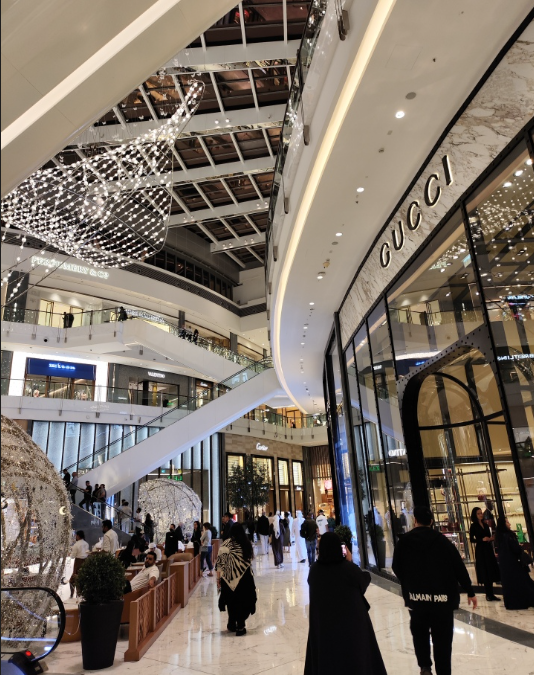
Dubai, in particular, functioned as a hyper-global luxury hub: high revenue concentration, diverse international clientele, intense tourism, and direct competition among top luxury Maisons within the same mall or district. At the same time, the region was under strong internal compliance pressure and group-level governance expectations, generating a dense layer of reporting, controls and process documentation on top of day-to-day operations.
Research on “compliance overload” shows that in many enterprises, the proliferation of controls and overlapping governance requirements increases operational costs and reduces agility if they are not integrated coherently.
Unlike classic shadow IT situations where local teams under-report their tools, this region displayed the opposite behaviour: a tendency to over-report and over-document, leading to internal overcompliance and operational entropy.
The Core Discovery: Overcompliance Operational Entropy
Most global organizations fear undercompliance and loss of control. In this case, the primary problem was the inverse: overcompliance operational entropy.
In other regions, when asked for a list of applications, local teams might declare seven systems and later investigation would reveal two hundred. In the Middle East, the pattern was reversed: teams might declare six hundred applications when closer analysis indicated roughly two hundred actual systems in active use. This behaviour reflected a strong desire to “do things right” and comply fully with every governance request, but it also created noise, duplication and confusion at enterprise level.
Operationally, this translated into situations where the same client or transaction information was captured and recorded in multiple systems and processes simultaneously, without a clear orchestration layer. Governance and compliance literature warns that uncoordinated control layers can generate “administrative overhead” and “organizational congestion”, where the cost of complying with overlapping requirements exceeds the value of the underlying risk management.
The result was not stronger governance, but:
- Duplicated operational effort.
- Fragmented customer intelligence.
- Reduced agility and slower decision-making.
- Inability to activate already existing group capabilities quickly.
- Growing frustration at boutique level, where demand was highest.
Luxury Retail Under Extreme Operational Pressure
The operational tension became clearest in the highest-performing boutiques.
In some flagship locations, the boutique was among the top performers worldwide in revenue. Yet, due to physical capacity constraints and lack of adapted queue-management and client-orchestration systems, ultra‑high‑net‑worth clients arriving in private jets could be left outside, waiting without a structured experience and sometimes turning away toward competitors.
In luxury, queuing is never neutral. Managed well, it can enhance anticipation and perceived value; managed poorly, it erodes loyalty and directly translates into lost sales. Industry research on queue management for high‑net‑worth clients highlights the need for segmentation, virtual queuing, appointment scheduling, priority access to private spaces and technology-enabled personalization to protect both client experience and conversion.
In this case, several concrete gaps appeared:
- No adapted system to manage high‑value queues (for example, SMS or messaging-based virtual queuing) that would allow clients to leave the physical line and be recalled when a slot and a showroom are ready.
- No fully integrated mechanism to pre‑prepare bespoke product selections for VIP visitors, despite the group having strong VIP clienteling practices and CRM elsewhere.
- Slow tax-refund and duty/VAT clearance flows for international clients, creating avoidable friction at the end of the journey.
Operational management in the boutique estimated that, with a properly adapted orchestration model (including queue management and tax-refund acceleration), up to thirty percent additional revenue could be realistically captured, using capabilities that already existed elsewhere in the group’s portfolio.
External research supports the idea that well‑designed queue and appointment management systems in luxury retail can significantly boost conversion and lifetime value by allowing brands to “capture every client moment” instead of losing demand at the door.
Existing Capabilities, Missing Orchestration
One of the most striking findings was not the absence of technology, but its fragmentation. Capabilities such as:
- VIP queue management and appointment scheduling.
- Clienteling histories and preference intelligence.
- Faster tax-refund and documentation workflows.
- Central messaging and notification systems.
already existed inside the group — sometimes implemented a dozen times in different regions or Maisons for different use cases. Luxury queue and VIP clienteling frameworks show that global CRM and appointment systems can provide a unified recognition layer for high-value clients, if orchestrated properly.
The problem was not technological scarcity. It was absence of orchestration and cultural adaptation in a region that was simultaneously:
- Hyper-international and high pressure.
- Highly compliant and control-oriented.
- Operationally fragmented across boutiques and functions.
Business Challenge
The challenge was not to build another centralized system or add another compliance layer. The challenge was to orchestrate existing capabilities into a regionally adapted operational model without breaking local culture, luxury experience or governance boundaries.
Concretely, the region needed to address:
- Duplicated operational processes and overlapping reporting.
- Fragmented and under-used customer intelligence.
- Disconnected regional capabilities that could be combined but were not.
- Slow information integration between boutiques, logistics and support systems.
- Limited orchestration autonomy for local decision-makers.
- Compliance overload and control fatigue, where too many unintegrated controls reduced effectiveness.
- Inconsistent customer interaction models across boutiques.
- Lack of a coherent “Middle East operational style” leveraging the region’s unique position.
The region had global exposure, but not a fully integrated operational identity that pulled together the best of global capabilities and local expectations.
Cultural Orchestration Problem
An important discovery was that operational models could not be simply copied from one geography to another. Queue management in luxury retail is highly sensitive to cultural expectations, tolerance for waiting, and interaction styles.
For example:
- In Japan, clients may accept structured, multi‑step queue processes and detailed pre‑questionnaires, reflecting high patience and procedural trust.
- In the United States, clients expect extremely fast, low‑friction interactions, often leaving if the system appears too complex or slow.
- In Dubai’s luxury context, clients often expect highly premium treatment, minimal friction, strong discretion and rapid escalation paths, particularly for VIP and ultra‑high‑net‑worth segments.
The challenge was not only technological. It was cultural and operational. The region needed its own orchestration model that was:
- Highly premium in look and feel.
- Low-friction and fast in practice.
- Culturally elegant for a diverse international clientele.
- Operationally autonomous at boutique and regional level.
- Globally connected to group systems and intelligence.
- Capable of integrating capabilities borrowed and adapted from other regions.
In governance terms, external analysis of “regulation overload” emphasizes that the problem is rarely the existence of rules in themselves; it is the way they are managed in isolation rather than through an integrated governance, risk and compliance (GRC) framework. The same logic applied here: the region did not need more rules; it needed integrated orchestration.
Our Role
The engagement focused on architecture discovery, operational intelligence, governance simplification and regional orchestration, with a strong cultural translation component.
Key activities included:
- Identifying duplicated capabilities already existing across the group and mapping where they could apply to Middle East operations.
- Mapping operational pain points across boutiques, logistics environments and support functions.
- Assessing where overcompliance and procedural duplication were reducing agility instead of increasing control.
- Identifying high-value operational bottlenecks: queues, showroom allocation, tax-refund workflows, client communication gaps.
- Supporting architectural integration approaches (for example, leveraging existing queue and appointment systems and CRM/clienteling platforms).
- Proposing more autonomous regional orchestration patterns within clear governance boundaries.
- Introducing adaptive governance principles: control rationalization, integrated dashboards, and clarity of ownership.
- Helping local teams prioritize operational outcomes and customer experience over procedural duplication.
- Translating global capabilities into culturally adapted Middle East operational models, rather than imposing a single template.
The work was about enabling the region to become a more intelligent orchestrator of its own ecosystem, not about replacing local judgement with central directives.
Diamond Inside Relevance
This became a strong Diamond Inside case because the value did not come from introducing completely new technology. The value came from discovering that many of the required capabilities already existed inside the organization, and that the region itself had the potential to become a powerful orchestrator once the constraints were reframed.
Specifically, the engagement revealed that:
- Queue management, appointment, CRM and tax-refund acceleration capabilities existed in other regions and could be selectively reused.
- Local teams had a precise understanding of operational pain points in boutiques and logistics environments.
- The region had both the revenue scale and the complexity to justify a more autonomous, integrated operating model.
- The main bottleneck was not lack of tools, but lack of integrated governance, orchestration and cultural adaptation.
The hidden capability was not only technological. It was the region’s ability to become an autonomous operational orchestrator, combining global assets and local insight into a distinctive “Middle East luxury operations style”.
Governance Transformation
A major outcome of the work was a shift in governance philosophy.
The objective was not less governance, but more adaptive governance. This aligned with broader recommendations on “control rationalisation” and integrated GRC frameworks for managing overlapping regulatory and internal requirements.
Concretely, this meant:
- Reducing unnecessary duplication in reporting and system usage.
- Simplifying operational reporting flows while preserving control quality.
- Integrating customer intelligence across systems to support VIP clienteling and queue orchestration.
- Enabling faster local decision-making within defined governance boundaries.
- Increasing regional autonomy to adapt and orchestrate capabilities taken from other regions.
- Improving orchestration between boutiques, logistics, tax-refund partners and core operational systems.
The transformation required balancing compliance, operational agility, cultural adaptation, customer experience and regional autonomy — all under strong luxury-brand constraints.
Operational Intelligence Examples
Several operational opportunities were identified and framed in a way that connected immediate boutique reality with group-level capabilities. Examples included:
- Intelligent luxury queue orchestration (virtual queuing, SMS/WhatsApp notifications, VIP segmentation and private lounge routing).
- Showroom allocation for high-value clients, with pre‑curated assortments based on known preferences and purchase history.
- Rapid customer notification when a space is ready, allowing clients to use the mall or hotel instead of physically waiting in line.
- Accelerated tax-refund workflows, reducing friction at the end of the purchase journey.
- Integration buses or lightweight ETL/ESB patterns for operational data exchange between regional and global systems.
- Boutique-level operational intelligence dashboards, combining queue, appointment, clienteling and tax-refund data.
- Selective reuse of group capabilities (for example, queue and appointment engines, CRM, AI-based prioritization) tailored to Middle East expectations.
These were not theoretical opportunities; they were concrete scenarios described by boutique leadership and validated against existing tools already deployed elsewhere in the group.
Strategic Insight
The key insight was: the region did not need more isolated systems; it needed operational orchestration.
The challenge was not technological scarcity. It was:
- Capability fragmentation.
- Duplicated governance and procedural overload.
- Cultural mismatch between imported operating models and local expectations.
- Lack of adaptive integration and clear orchestration roles.
Once this became visible, the conversation shifted from “how do we control the region?” to “how do we help the region orchestrate itself intelligently?”. This is consistent with broader work on administrative simplification, which emphasizes cutting “red tape” by streamlining overlapping requirements and focusing on clarity, integration and outcome-oriented governance.
Outcome
The engagement helped establish a more integrated operational and governance architecture for the region, while reinforcing its autonomy and strategic importance.
It contributed to:
- Improved visibility of duplicated capabilities and processes.
- Identification of simplification opportunities in compliance and reporting.
- Stronger regional orchestration capacity over boutique and logistics operations.
- More adaptive governance approaches, focused on integration rather than accumulation.
- Better integration thinking between customer experience, back-office processes and group systems.
- Increased regional operational autonomy within clear governance boundaries.
Most importantly, it helped reframe the region not as a compliance problem, but as a high‑potential operational ecosystem capable of integrating global capabilities into a uniquely Middle Eastern luxury operating model. The architecture and governance patterns introduced during the engagement continued to support regional operations after the project, forming a reference for how to deal with overcompliance and operational entropy in other high-pressure regions.
Why This Case Matters
This case matters because it demonstrates a rare capability: integrating global enterprise capabilities into a culturally specific, high‑pressure operational environment under luxury constraints.
The challenge was not purely technical. It involved:
- Luxury operations and VIP clienteling.
- Governance and compliance overload.
- Operational intelligence and real-time orchestration.
- Cultural adaptation and expectation management.
- Regional autonomy and risk boundaries.
- Capability reuse and Diamond Inside logic.
It sits exactly at the intersection between Governance & Transformation, Diamond Inside, Rationalization.AI, operational intelligence and adaptive systems thinking — in one of the most demanding luxury environments in the world.